Scratch Homemade Focaccia Stuffing (The Only Thanksgiving Carb That Matters)

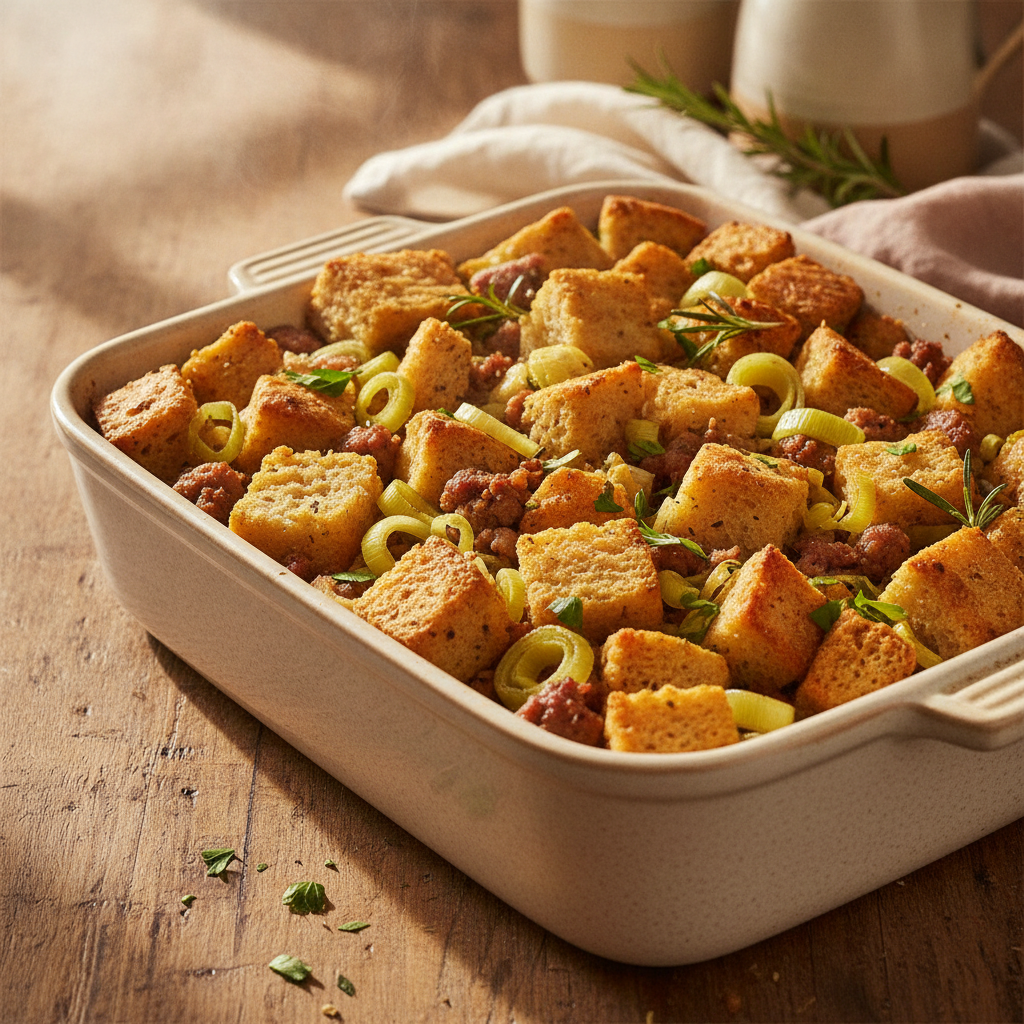
Upgrade your Thanksgiving table with homemade olive oil and rosemary focaccia baked, cubed, dried, and tossed with sweet Italian sausage, leeks, fresh herbs, and rich scratch broth for the ultimate crispy-on-top, custardy-in-the-middle stuffing.
On this page
Listen… if somebody tries to hand me a cardboard box of dehydrated bread pellets on Thanksgiving, I will smile politely because I have manners, but inside, my Italian soul is withering away into dust.
I just cannot do it, mama. I cannot sit at a holiday table that we spent three days prepping for and pile a scoop of soggy, grayish, reconstituted sodium cubes next to a gorgeous bird. Stuffing is—without a shred of doubt in my mind—the single greatest side dish on the Thanksgiving table. It holds the throne. It is the carb of honor. So why on earth are we treating it like an afterthought out of a pantry box?
In this house, we do not do pre-cut bagged croutons, and we definitely do not do wet mush. The food that comes out of my Colorado Springs kitchen runs heavily Italian, built on real ingredients, good olive oil, and time. A few years ago, I decided to swap out standard sandwich loaf bread for a big, golden sheet of my homemade rosemary and sea salt focaccia.
OMG. The heavens opened up. The angels sang. Hubs stopped walking through the kitchen just to grab coffee and literally stood over the cooling baking dish with a fork in his hand, ignoring his home office Slack pings completely.
Homemade focaccia makes the undisputed king of Thanksgiving stuffing, and once you make it this way, you will never look back.
Why are we using homemade focaccia instead of regular white bread?
If you have ever baked a batch of scratch focaccia, you know what happens to the crumb. It is not like standard sandwich bread, which is tight, uniform, and collapses into damp paste the second broth hits it.
Focaccia is entirely different:
- The structure can actually take a bath in broth. Focaccia has big, gorgeous, irregular air pockets. When you bake it, let it go slightly stale, and toast it in the oven, those open pockets act like little flavor sponges. They drink up rich homemade chicken stock and aromatics without disintegrating into baby food.
- The crust brings serious backbone. That golden-brown, olive-oil-fried bottom crust that you get on a good focaccia doesn’t surrender when it bakes in the dish. It holds its chew, giving you the best textural contrast between the crunchy top layer and the tender custard underneath.
- Built-in herb and olive oil flavor. Instead of relying solely on dried poultry seasoning sprinkled over blank white bread, focaccia comes pre-loaded with extra virgin olive oil, flaky salt, and baked-in fresh rosemary. The flavor is already woven directly into the grain before you even touch an onion.
Here in Colorado, our dry mountain air means bread goes dry fast anyway, which is usually a pain when you just want a sandwich. But for holiday stuffing? It is a superpower. You bake your focaccia two days ahead, cube it up, let the crisp mountain air do its thing on sheet pans, and you have the most magnificent stuffing base known to mankind.
What makes this Italian-leaning recipe hit so differently?
Classic stuffing is great, but leaning into my kitchen roots makes it unforgettable. We are not turning this into a pizza casserole—don’t panic, there is no tomato sauce anywhere near this dish. It still tastes 100% like Thanksgiving, but dialed up with deeper, savory undertones.
- Sweet Italian sausage with fennel. Instead of standard sage breakfast pork, I use bulk sweet Italian sausage. The toasted fennel seeds in the sausage sing against the rosemary and thyme in the bread.
- Leeks alongside yellow onions. Onions are mandatory, but adding sliced leeks brings a sweet, melt-in-your-mouth richness when melted down in butter.
- A mountain of fresh herbs, zero dried stuff. Fresh sage, flat-leaf Italian parsley, and fragrant garden thyme. Dried herbs from a plastic shaker that has been living in your pantry since 2022 will make your stuffing taste like lawn clippings. Buy the fresh bundles, mama. Your kitchen will smell like an absolute dream.
- Real Parmigiano-Reggiano. Just a half cup of finely grated, aged Parmigiano folded through the mix gives a nutty, salty depth that ties the whole pan together without making it cheesy.
And before anyone asks: no apples. Luke, who is five going on fifteen, has an absolute vendetta against apples and mashed potatoes. He despises both with the fiery passion of a stubborn five-year-old. While he will skip the mashed potatoes entirely on Thanksgiving day—running around outside in head-to-toe camo with his toy diggers until dinner is on the table—he will demolish a giant bowl of this stuffing because it is savory, crunchy, and tastes like real food.
First, the Focaccia: Store-Bought or Homemade?
Every great stuffing starts with the bread, so before we get to the master recipe, let’s talk focaccia. You need one 9x13-inch slab, and you have two good ways to get it. Buying it ready-made is totally fine. Making it homemade is where the real flavor lives. Pick the one that fits your week.
Option 1: Buy It Ready-Made (Zero Guilt)
Listen, life happens. If you are balancing a chaotic morning drop-off, a sink full of breakfast plates, and an endlessly growing holiday prep list, I give you full, guilt-free permission to take the shortcut.
Homemade focaccia will always give you the absolute best depth of flavor and texture, but if you do not have the bandwidth to mix and proof dough this week, you can buy ready-made focaccia without ruining your stuffing. Here are the ground rules if you go the store route:
- Head to an actual bakery: Skip the commercial bread aisle with the plastic bags of pre-sliced squares. Go to a local bakery or a grocery store with a scratch bakery counter.
- Buy a whole, uncut loaf: Look for an uncut rosemary or sea salt focaccia with visible dimples, bubbly volume, and golden olive oil sheen. An uncut loaf retains interior moisture until you are ready to cube it.
- Avoid overly flavored loaves: Skip focaccia topped with whole cherry tomatoes, olives, onions, or heavy cheese. Those toppings introduce moisture and conflicting flavors that clash with classic Thanksgiving stuffing herbs like sage, thyme, and parsley.
There is no shame in leaning on an artisan bakery when you are stretched thin. The goal is a stellar meal with the people you love, not an exhaustion trophy.
Option 2: Make It Homemade (For the Real Flavor)
If you have the bandwidth, this is the one. Here is my scratch rosemary focaccia for a 9x13 pan.
What You Need
You do not need fancy equipment or a commercial mixer for this dough. In fact, your hands and a simple bowl are your best tools. Here is what needs to hit your counter:
- Bread flour (500 grams / about 4 cups): Do not swap this for all-purpose if you can avoid it. Bread flour has a higher protein content (usually 12–14%), which creates the strong gluten network needed to trap big gas bubbles in a high-hydration dough.
- Warm water (420 grams / about 1 ¾ cups): Think lukewarm bathwater, around 100°F to 105°F. This creates an 84% hydration dough—yes, it will feel very sticky and wet at first, but trust the process!
- Instant yeast (7 grams / 1 standard packet / 2 ¼ teaspoons): Instant yeast can be mixed directly with the dry ingredients. If you only have active dry yeast, simply let it bloom in the warm water with the honey for 5 minutes until frothy before mixing.
- Honey (1 tablespoon): Feeds the yeast and gives the crust a gorgeous, golden-brown blister in the oven.
- Fine sea salt (10 grams / 2 teaspoons): Bread without salt tastes completely flat. Do not skip or reduce this.
- Extra virgin olive oil (divided, at least ⅓ cup total): Use the good stuff here. You will need 2 tablespoons in the dough, 2 to 3 tablespoons to coat the pan, and another generous drizzle across the top before dimpling.
- Fresh rosemary (2 to 3 tablespoons, roughly chopped): Fresh is non-negotiable. Dried rosemary feels like pine needles between your teeth; fresh rosemary sizzles in the olive oil and perfumes the whole loaf.
- Flaky sea salt (such as Maldon): A generous sprinkle across the top right before it hits the oven gives you those crunch crystals that make focaccia unforgettable.
Your Timeline: Overnight or Same-Day
You have two solid options for making this dough fit around your actual life, because between school drop-offs, keeping a house running, and holiday chaos, rigid schedules are a trap.
Option A: The Overnight Method (My Personal Favorite) This is where the magic happens. Mixing the dough takes 10 minutes the evening before. You cover the bowl tightly and slide it straight into the refrigerator for 12 to 24 hours. The cold temperature slows the yeast down to a crawl, allowing enzymes to break down starches into complex sugars. The result? Insane flavor, massive bubbles, and zero morning stress. On baking day, all you have to do is transfer the dough into your oiled pan, let it come to room temperature and puff up for 2 to 3 hours, dimple, and bake.
Option B: The Same-Day Fast Track If you woke up at 6:45 am and realized you need focaccia ready by lunchtime, you can keep the dough at room temperature. After mixing and doing your stretch-and-folds, let the dough rise in a warm spot in your kitchen for 1.5 to 2 hours until doubled. Transfer it to your oiled pan, let it proof for another 1 to 1.5 hours until pillowy, then dimple and bake. It will still taste fantastic, though the overnight version yields slightly deeper flavor and bigger interior bubbles.
The Method
Don’t let bread-making intimidate you. Focaccia is genuinely one of the most forgiving doughs on the planet because there is no intricate shaping, no scoring with a razor, and no fussy Dutch oven required. Here is how we make it happen:
- Mix the base: In a large mixing bowl, whisk together the bread flour, instant yeast, and fine sea salt. In a measuring glass, stir together the warm water and honey. Pour the liquid into the dry ingredients along with 2 tablespoons of extra virgin olive oil. Using a sturdy silicone spatula or your clean hand, mix until all the dry flour is absorbed. The dough will look shaggy, sticky, and completely unrefined. That is totally normal! Cover the bowl with a damp towel or plastic wrap and let it rest for 20 minutes to allow the flour to hydrate.
- Perform stretch-and-folds: Uncover the bowl. Wet your hands with a little cool water so the dough doesn’t stick to your skin. Reach under one side of the dough, pull it up gently, and fold it over the center. Rotate the bowl 90 degrees and repeat. Do this four times (one complete turn of the bowl). You will instantly feel the dough smooth out and gain tension. Cover the bowl and let it rest for 20 minutes. Repeat this stretch-and-fold process two more times (three rounds total over an hour). By the third round, your shaggy mess will have transformed into a soft, elastic, silky dough.
- First rise: If doing the overnight method, cover the bowl tightly with plastic wrap and transfer it to the fridge for 12 to 24 hours. If baking today, cover the bowl and let it sit on your kitchen counter for 1.5 to 2 hours until it has doubled in bulk and shows visible bubbles under the surface.
- Prep the pan: Pour 2 to 3 tablespoons of good extra virgin olive oil into a standard 9x13 metal baking pan. Use your fingers or a pastry brush to coat the bottom and all four sides thoroughly. Metal pans conduct heat significantly better than glass or ceramic, giving you that deeply fried, crunchy bottom crust that makes focaccia so incredible.
- Second rise in the pan: Gently tip your dough into the prepared pan. Do not punch it down! You worked hard to build those air pockets; protect them like treasure. Gently turn the dough over once so both sides are coated in oil. Using your fingertips, gently tease the dough toward the corners of the pan. It will resist and shrink back slightly—that’s fine! Let it rest uncovered for 10 minutes to relax the gluten, then tease it toward the corners again. Now, let the dough proof undisturbed at room temperature for 2 to 3 hours (if coming cold from the fridge) or 1 to 1.5 hours (if room temp). When it is ready, the dough should fill the entire pan, be at least an inch deep, jiggle like gelatin when you nudge the pan, and show giant glassy bubbles on top.
- Dimple and season: Preheat your oven to 425°F (220°C). Drizzle another tablespoon of olive oil across the top of the puffed dough. Scatter your chopped fresh rosemary evenly over the surface. Now comes the best part: oil your clean fingers, hold your hands perpendicular to the dough, and press straight down until your fingers gently touch the metal bottom of the pan. Work your way across the entire surface. You will feel bubbles exploding under your fingers and popping to the surface. It is the most satisfying sensory experience in home cooking. Finish with a generous pinch of flaky Maldon salt.
- Bake to deep golden perfection: Slide the pan onto the center rack of your preheated oven. Bake at 425°F for 25 to 30 minutes. You are looking for a deep golden-brown top, blistered bubbles, and edges that have shrunk slightly away from the pan sides with a sizzling, dark bottom. If the top is browning too fast around minute 20, tent a sheet of foil lightly over the pan.
- Cool properly: Remove the pan from the oven and let it sit for 5 minutes. Then, using a sturdy spatula, slide the focaccia out of the pan and onto a wire cooling rack. If you leave it in the metal pan, steam will collect on the bottom and turn that glorious crunchy crust soggy. Let it cool completely before slicing.
If you have a kiddo around, this is where you enlist them. Luke stands on his wooden step stool at the island, rolls up his camo sleeves, coats his hands in olive oil, and helps me deeply dimple the dough right before it goes into the hot oven. He takes his dimpling duties dead seriously, pressing his little fingers all the way to the bottom of the pan to make room for flaky sea salt and minced fresh rosemary.
Once your focaccia (homemade or bakery) is completely cool, slice it into rough one-inch cubes. You want about 10 to 12 cups of cubed focaccia for this recipe.
Pro-tip for drying your cubes: Scatter the cubes across two large rimmed baking sheets. Bake at 300°F for about 20 to 25 minutes, tossing halfway through, until they feel dry and firm to the touch like croutons, but not dark brown. Let them sit out on the counter overnight uncovered. They need to be bone-dry so they can guzzle up the stock without turning into mush.
The Master Recipe: Homemade Scratch Focaccia Herb Stuffing
Prep time: 35 minutes
Bake time: 50 minutes
Servings: 10 to 12 hungry people
The Ingredients You Will Need
- 10 to 12 cups dried homemade focaccia cubes (from one standard 9x13 focaccia loaf, preferably baked with rosemary and sea salt)
- 1 pound sweet Italian sausage, casings removed
- 1 stick (8 tablespoons) unsalted butter, divided (plus extra for buttering the baking dish)
- 2 tablespoons extra virgin olive oil
- 2 large leeks, white and pale green parts only, washed thoroughly and thinly sliced
- 1 large yellow onion, finely diced
- 4 stalks celery, diced (include the tender leafy inner tops!)
- 6 cloves garlic, minced
- 1/4 cup finely chopped fresh Italian flat-leaf parsley
- 2 tablespoons finely chopped fresh sage
- 1 tablespoon finely chopped fresh thyme leaves
- 2 1/2 to 3 1/2 cups rich homemade chicken stock (or turkey stock)
- 2 large eggs, beaten
- 1/2 cup freshly grated Parmigiano-Reggiano
- 1 teaspoon kosher salt (adjust based on how salty your stock is)
- 1/2 teaspoon freshly cracked black pepper
Step-by-Step Instructions
1. Prep your pan and dry your bread
Butter a large 9x13-inch baking dish generously with softened butter. Place your dried, cooled focaccia cubes into the largest mixing bowl you own. Seriously, find the giant metal one—you need room to toss this without sending bread cubes flying across your floor.
2. Brown the sausage
Heat a large skillet over medium-high heat. Add your sweet Italian sausage, breaking it up with a wooden spoon into bite-sized crumbles. Cook until it is nicely browned and crispy around the edges, about 7 to 9 minutes. Use a slotted spoon to transfer the sausage directly into the giant bowl with the focaccia cubes, leaving the rendered fat in the pan.
3. Sauté the aromatics low and slow
Turn the heat down to medium. Add 4 tablespoons of the butter and the olive oil into the skillet with the sausage drippings. Once melted, toss in the sliced leeks, diced yellow onion, and celery. Cook gently for about 10 to 12 minutes, stirring often, until the vegetables are silky, translucent, and sweet. Do not let them burn—you want tender sweetness here.
4. Bloom the garlic and fresh herbs
Add the minced garlic, fresh parsley, sage, and thyme to the skillet. Cook for just 60 to 90 seconds until your kitchen smells so good you want to cry. Season the vegetable mixture with the kosher salt and cracked black pepper. Remove the skillet from heat and dump everything over the focaccia and sausage in the big bowl.
5. Whisk the custard binding
In a separate medium bowl or large measuring cup, whisk together 2 1/2 cups of the chicken stock and the 2 beaten eggs until smooth.
6. The gentle toss
Pour the stock and egg mixture over the bread and sausage. Sprinkle in the grated Parmigiano-Reggiano. Using your hands or two large silicone spatulas, gently fold everything together. You want every single cube of focaccia to drink up that liquid.
The moisture check: Let the mixture sit in the bowl for 5 minutes. Peek at the bottom. If the bread still feels hard and dry and there is zero liquid pooling, splash in another 1/2 to 1 cup of chicken stock. You want the cubes moist, saturated, and heavy, but not floating in soup.
7. Fill the dish and dot with butter
Tip the stuffing into your prepared buttered baking dish. Spread it out evenly, but do not smash it down. Keep it light and airy so heat can circulate. Cut the remaining 4 tablespoons of butter into small cubes and scatter them across the top of the bread.
8. Bake to golden, crispy perfection
Preheat your oven to 375°F. Cover the baking dish tightly with aluminum foil. Bake covered for 30 minutes to let the center steam, cook through, and set that silky egg-and-stock custard.
Remove the foil and bake uncovered for another 20 to 25 minutes. You are looking for deep golden, shatteringly crisp crouton tops with a bubbling, tender center. Let it rest on the counter for 10 minutes before serving so it sets up beautifully.
How do you get that crispy-top, custardy-center texture?
The eternal stuffing debate is texture: people either end up with dry croutons or Thanksgiving oatmeal. Neither is acceptable.
To nail the Goldilocks middle ground, keep these three rules in your back pocket:
- Do not skip the eggs. The eggs mixed into the warm stock create a light, savory custard. Without them, bread soaked in stock just breaks down into porridge. With them, the bread holds its identity, creating a tender, pillowy crumb inside.
- Bake covered first, uncovered second. If you bake uncovered the entire time, the top will turn into rock-hard jawbreakers before the inside has cooked through. The foil traps the steam to cook the leeks, sausage, and egg mixture. The uncovered finish brings the crunch.
- Do not press the stuffing into the pan. Treat the bread like you respect it. Fluff it gently into the baking dish so steam can move between the cubes. Those elevated ragged edges sticking up are what turn into deep, golden crunchy bits that everyone fights over at the table.
Can you prep this ahead so holiday morning isn’t pure chaos?
Yes, absolutely. Being a stay-at-home mom means my days are already full of laundry, kitchen upkeep, and getting Luke out the door for his kindergarten drop-off by 8:00 AM sharp. On Thanksgiving, I refuse to be trapped at the stove sweating through my clothes while everyone else is relaxing.
Here is how you stage this so Thanksgiving morning feels like a breeze:
- Two days ahead: Bake your focaccia. Cut it into cubes, toast it in a slow 300°F oven, and leave the sheets on the dining table or counter covered loosely with a clean kitchen towel. It will stay perfectly dry.
- One day ahead: Brown the sausage, sauté the leeks, celery, onions, garlic, and fresh herbs. Let the cooked vegetable and meat mixture cool completely, pop it into a glass storage container, and stash it in the fridge. You can also grate your cheese and chop extra herbs.
- Thanksgiving morning: Bring your sausage mixture to room temperature for 20 minutes. Toss the dry focaccia cubes, cooked sausage-vegetable mixture, cheese, and your egg-stock mixture together. Transfer to your buttered dish, dot with butter, and bake.
A quick warning: Do not assemble the entire liquid-soaked casserole the night before and leave it sitting in the fridge unbaked. The focaccia will absorb too much liquid over 12 hours and lose its airy structure. Always mix the dry bread with the liquid right before it goes into the oven!
What do you do with leftover focaccia stuffing (if there is any)?
If you somehow have leftovers, do not microwave them. Microwaving turns focaccia stuffing rubbery, and that is a tragedy.
Instead, heat a well-seasoned cast iron skillet over medium heat with a tiny pat of butter. Press a thick square of leftover stuffing flat against the hot iron. Let it sizzle undisturbed for 4 to 5 minutes until the bottom develops a deeply browned, insanely crunchy crust.
Slide it onto a plate and crown it with a sunny-side-up egg with a runny yolk. Break the yolk, let it coat the crispy focaccia, and drink a hot cup of coffee while the morning is quiet. Hubs and I look forward to that post-Thanksgiving skillet breakfast almost more than the actual holiday meal itself.
Give this scratch focaccia stuffing a spot on your table this year, friend. It takes a tiny bit more love than tearing open a cardboard box, but the first time you hear the crunch of that rosemary-scented crust, you will know every single minute was worth it.
Affiliate link — if you sign up or buy through it, My Mama Mode may earn a small commission at no extra cost to you. As an Amazon Associate, My Mama Mode earns from qualifying purchases. My Mama Mode also participates in other retailer affiliate programs. Learn more.
Frequently asked
Yes! While homemade gives you total control over the herbs, salt, and olive oil, a good bakery focaccia from a local Italian market will still beat standard sandwich bread any day. Just make sure it is plain sea salt and herb focaccia, cut into cubes, and dried out thoroughly in the oven.
I strongly recommend baking it separately in a baking dish. Scratch focaccia stuffing shines because of that incredible textural contrast between the crunchy, olive-oil crisped top and the tender custard interior. When stuffed inside a bird, it steams completely and you lose all those crispy, golden bits everyone loves.
A rich, gelatinous homemade chicken or turkey stock made from roasted bones and aromatics is unmatched here. If using store-bought broth in a pinch, reach for a low-sodium, high-quality chicken bone broth so you can control the salt levels yourself.
Tap the one that fits, mama — no comment box, no pressure ✦
Keep reading, mama
15-Minute Prep Scratch Mountain Beef Stew for Cold Colorado Weeknights
Warm up a Colorado winter night with a hearty, scratch-made beef stew that takes just 15 minutes of active prep before low-and-slow simmer magic.
Simple No-Yeast Homemade Sandwich Bread Any Busy Mom Can Bake for School Lunches
Annie shares her foolproof, 45-minute scratch-made no-yeast sandwich bread recipe that saves kindergarten lunch prep on busy Colorado mornings.
20-Minute Scratch Snack Bars That Actually Hold Up in a 4-Year-Old's Lunchbox
Ditch the boxed store-bought junk! These easy, 20-minute scratch-baked snack bars are lunchbox-approved, nut-free friendly, and made with real pantry food.