How to Stop a 4-Year-Old Boy From Hitting When He's Angry (Without Losing Your Mind)

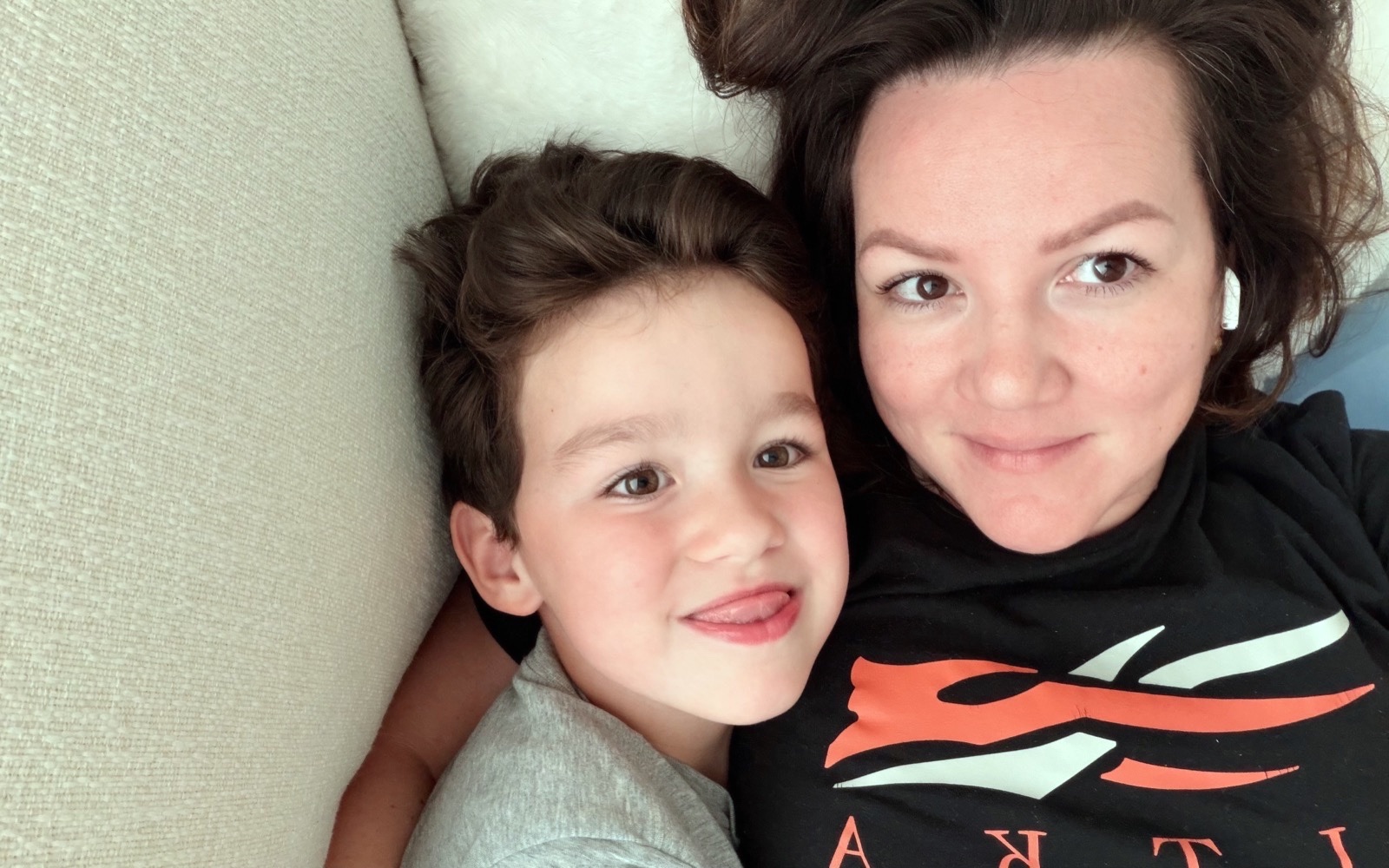
When your high-energy 4-year-old hits, stay calm, block the hit immediately ('I won't let you hit'), redirect that big physical energy into safe outlets, and teach emotional regulation tools when everyone is calm.
On this page
Okay so… picture this. We are up in the mountains on a gorgeous Colorado weekend. The sun is shining, the mountain air is crisp, Hubs has his gear ready, and Luke—my wild, sweet, camo-loving 4-year-old—is standing next to a crystal-clear stream holding his brand new miniature fishing rod. Everything is absolute magic, right? Picture-perfect Instagram mama moment.
Then, out of nowhere, Luke’s line tangles around a submerged willow branch. Hubs steps in gently to help untangle it, and BOOM. Luke completely loses his little mind. Before either of us can even react, my sweet little dude rears back his arm and lands a solid, surprisingly heavy right hook straight onto Hubs’ thigh.
I stood there in my hiking boots, clutching my venti iced coffee like a lifeline, completely frozen. My sweet 4-year-old—who ten minutes ago was singing a song about pinecones—just turned into a tiny ninja warrior because his line got stuck.
Listen, if you have ever had your 4-year-old turn around and whack you, your partner, or a friend at the playground, take a giant breath right now. Drop those shoulders. Take a sip of whatever caffeine is keeping you alive today. You are NOT a bad mama, and your kid is NOT a tiny terror. You’ve just got a big-feeling 4-year-old whose brain is running about ten miles faster than his impulse control.
With links for literally everything and a desperate desire to solve every parenting mystery, I spent weeks diving into this, testing strategies with Luke, and figuring out what actually works in the real world. Grab your coffee, pull up a cushion, and let’s talk about how to stop a 4-year-old from hitting when he’s mad.
Why Is My Sweet 4-Year-Old Suddenly Turning Into a Tiny Ninja When He’s Mad?
Here is the honest truth about the age four stage: it is a wild, confusing transition zone. Luke is at school now, and in so many ways, he feels like such a big kid! He puts on his favorite camo pants by himself, he wants to do everything just like his dad, and he’ll sit at the table and devour a whole sushi roll with chopsticks like a little grown-up.
But under all that big-kid swagger, his brain is still very much in construction mode. At four, kids are experiencing a massive surge in independence, language skills, and emotional awareness. They want to control their world so badly. But when frustration hits—like a tangled line on a fishing rod or being told it’s time to stop playing snow monsters and go inside—their nervous system goes straight into fight-or-flight mode.
When a 4-year-old gets overwhelmed by anger, the rational, logical part of their brain completely goes offline. They don’t have the neurological brakes yet to think, ‘Hmm, I am feeling angry about this Lego structure collapsing, so I should express my frustration using my words.’ Nope! Their body reacts before their brain can catch up. That explosion of energy has to go somewhere, and for a high-energy kid like Luke, it goes straight to the fists.
What Is Going On Inside Their 4-Year-Old Brains When Hands Start Flying?
To figure out how to stop the hitting, Hubs and I had to understand what was actually happening in Luke’s brain during those fiery meltdowns. Think of your child’s brain as having two main parts: the downstair brain (the primitive, survival-driven safety alarm) and the upstairs brain (the logical, problem-solving, cool-headed thinker).
When your 4-year-old gets furious, that downstairs brain takes over completely. It floods their body with adrenaline. Their heart rate spikes, their muscle tension zooms to 100%, and they are primed for action.
Because they are 4, their upstairs brain—the part that handles impulse control—is still very much under construction. It won’t fully mature until their mid-twenties! So expecting a mad 4-year-old to self-regulate without your help is like asking Luke to drive our truck down a Colorado mountain pass. He literally does not have the machinery to do it alone yet.
Hitting isn’t usually calculated or malicious at this age. It’s a physiological reflex to feeling overwhelmed, powerless, or out of control. Once I realized Luke wasn’t hitting us to be mean—he was hitting because his system was overloaded—it shifted my entire perspective. I stopped taking it personally, which made it a whole lot easier to stay calm and actually help him.
How Do I Handle the Exact Moment He Tries to Whack Me or Hubs?
When the hit comes flying at you, the real-time reaction is EVERYTHING. I used to make the mistake of trying to talk Luke through his feelings while he was trying to punch my knees. Spoiler alert: deep lectures do not work on a human tornado.
Here is the exact step-by-step framework Hubs and I started using, and it completely turned things around for us:
- Block the hit gently but firmly. Your number one job is safety—yours and theirs. Put your hand out, catch their wrist gently, or step back. Do NOT let them land the hit if you can catch it.
- Keep your script super short and punchy. Do not give a sermon! Their brain cannot process big sentences right now. Use a calm, steady, heavy voice. Say: “I won’t let you hit me. Hitting hurts.”
- Provide physical containment if needed. If Luke is swinging wildly, I will gently hold his wrists or wrap him in a firm, loving body hug from behind (if he accepts touch) to help his nervous system feel safe and grounded. If he doesn’t want to be held, I step just out of arm’s reach and stay right there as a safe, calm presence.
- Validate the feeling, NOT the action. Say: “It is totally okay to be mad that we have to pack up and go. It is NOT okay to hit.”
- Wait out the storm. Don’t try to fix it, demand an apology, or explain why hitting is bad yet. Just be the anchor in their emotional hurricane.
What Are Some Real-Life Gear and Gadgets That Actually Help Tame the Aggression?
Quick heads up before we dive into my favorite tools: this post contains a few affiliate links, which means I might earn a tiny commission if you grab something through them at zero extra cost to you—gotta keep my iced coffee supply fully funded, friend!
As the tech-obsessed mama, you know I wasn’t going to navigate this season without testing out some cool gear to help Luke channel that wild energy safely. Here are three tools that have genuinely made a huge difference in our household:
1. Inflatable Dinosaur Bop Bag (Punching Bag)
We set this up in the corner of Luke’s room, and it has been a total game-changer for redirecting physical aggression.
- PROS: Gives big-energy kids a 100% safe, appropriate target to strike when they are furious. Sand-weighted base bounces right back up. Huge hit for active 4-year-olds who need heavy sensory input.
- CONS: It takes up floor space, and if you have a dog, you need to watch out for sharp claws puncturing the vinyl!
2. Weighted Compression Lap Pad / Calm-Down Mat
When Luke is winding down from a big explosion, sensory pressure helps bring his nervous system back to baseline.
- PROS: The deep touch pressure releases soothing brain chemicals. Super portable for road trips into the mountains or quiet moments after school.
- CONS: Some kids don’t like feeling weighed down when they are actively angry; it works best after the initial peak of anger has passed.
3. Tactile Emotion & Breathing Cards for Kids
Visual tools that give kids physical things to trace with their fingers while breathing.
- PROS: Highly visual, engaging, and gives tiny hands something non-destructive to grip. Excellent for teaching coping skills during calm moments.
- CONS: Requires parent guidance at first—you can’t just toss the cards at a raging 4-year-old and expect them to start meditating!
How Can We Channel All That High-Energy Wildness BEFORE the Meltdown Starts?
One thing I’ve learned raising a high-energy Colorado kid who lives in camo boots and loves hunting for bugs is that movement is medicine. If Luke doesn’t get enough heavy physical input during the day, that pent-up energy sits in his body like a shaken-up soda bottle. The smallest trigger will cause it to explode.
We started building “heavy work” directly into our daily routine. Heavy work is any activity that pushes or pulls against the body, giving deep sensory input to muscles and joints. It naturally calms an overstimulated nervous system!
Here are some simple ways we channel Luke’s physical energy before it turns into hitting:
- The Trail Hauler: When we go hiking in the mountains, Luke’s job is to carry his own small backpack loaded with his water bottle, a snack, and his favorite rocks he finds along the way. Carrying that weight grounds him.
- The Camp Helper: Hubs gets Luke involved in physical outdoor tasks—like carrying small firewood logs, helping carry the tackle box, or pulling out his fishing rod to practice casting on the grass.
- Animal Wall Pushes: When I notice Luke getting revved up indoors, I’ll yell, “Quick, Luke! The wall is falling down! Push it back with all your muscle!” He will plant his feet and push against the living room wall with all his strength for 30 seconds. It releases that physical tension instantly.
- The Sushi Chopstick Challenge: Fine motor tasks combined with heavy physical play work wonders. Before we go out for sushi (Luke’s absolute favorite treat), we make sure he does 10 minutes of big jumping jacks or frog hops. By the time he sits down to tackle his sushi with chopsticks, his nervous system is centered.
How Do We Teach a 4-Year-Old What to Do WITH His Anger Instead of Hitting?
You can’t just tell a 4-year-old “don’t hit” without giving them a concrete alternative. If you tell them what not to do, their brain drops the word “don’t” and just hears “HIT!” Plus, anger is a totally healthy human emotion—we want Luke to know it’s fine to feel mad, but hitting isn’t how we express it.
We teach alternative behaviors during what I call “peaceful weather”—times when Luke is happy, fed, and completely calm. NEVER try to teach a new skill during an active meltdown!
Here are the exact alternative outlets we taught Luke:
- Stomp like a T-Rex: When Luke feels the mad energy in his body, we tell him to slam his feet onto the floor as hard as a dinosaur. It discharges the aggression safely.
- Squeeze the Angry Pillow: We designated a soft couch cushion as the “Angry Pillow.” If he feels like striking something, he knows he can run over and give that pillow a huge squeeze or a solid punch.
- Dragon Breaths: We practice taking deep breaths in, and blowing out “hot dragon fire” to cool off our anger. (Pro-tip: Hold up your fingers and tell them to blow out the birthday candles! Works like a charm every time).
- Use Power Phrases: We practice teaching him simple words to shout when he’s mad instead of swinging his arms: “NO! I DON’T LIKE THAT!” or “I NEED A BREAK!” Shouting a loud boundary gives them that same strong release of vocal energy without physical harm.
What Mistakes Was I Making That Accidentally Made Luke’s Hitting Worse?
Oh man, let’s be real for a minute. I made SO many mistakes early on. Motherhood doesn’t come with a manual, and when your kid hits you, it triggers your own reflex to snap. Here are three things I was doing that actually made the hitting worse:
- Mistake #1: Yelling back. When Luke hit Hubs or me, my instinct was to gasp and shout, “Hey! We do NOT hit in this house! That is naughty!” Adding my angry energy to his angry energy was like dumping gasoline on a campfire. It just escalated his fight-or-flight response.
- Mistake #2: Giving a giant speech during the hit. I used to try to hold his hands and give a whole lecture about feelings and kindness while he was still screaming. His brain literally couldn’t hear me. Save the talk for 20 minutes later when you are sitting together having a snack.
- Mistake #3: Sending him to a harsh, isolated time-out. Isolating Luke when he was overwhelmed made him feel unsafe and abandoned in his big feelings, which led to bigger explosions next time. Switching to a “Time-IN”—where I stay nearby and offer calm co-regulation—changed everything.
How Long Does It Actually Take to Stop Hitting, and When Should You Worry?
I wish I could tell you that you’ll try these steps once and your 4-year-old will instantly transform into a peaceful monk who never swings a fist again. But real life isn’t a sitcom, mama! Behavior change is a gradual process of building brand new brain pathways.
With consistent boundaries and calm responses, Hubs and I saw a huge drop in Luke’s hitting within about two to three weeks. The angry feelings didn’t disappear, but the physical outbursts got much smaller and far less frequent.
When should you consult a professional? If your 4-year-old’s hitting is accompanied by severe injury to themselves or others, if it happens constantly across every environment (school, home, playground) without any clear triggers, or if you feel unsafe in your own home, please reach out to your pediatrician or a pediatric behavioral specialist. There is zero shame in getting extra support for your family!
At the end of the day, remember this: your little dude’s big reactions are not a reflection of your parenting skills. They are just a reflection of his young, developing brain learning how to handle a big, complicated world. Stay consistent, keep your cool, hold those boundaries firm, and don’t forget to refuel your own cup (preferably with a gigantic iced coffee)!
You’ve got this, friend. We are in the trenches together!
Affiliate link — if you sign up or buy through it, My Mama Mode may earn a small commission at no extra cost to you. As an Amazon Associate, My Mama Mode earns from qualifying purchases. My Mama Mode also participates in other retailer affiliate programs. Learn more.
Frequently asked
First, prioritize safety by stepping in immediately and physically blocking any further hits. Say calmly and firmly, 'I won't let you hit.' Focus your initial attention on comforting the child who was hit to show that hitting does not earn positive attention. Then, take your 4-year-old by the hand, move to a quiet spot away from the play area, and help them cool down before discussing what happened.
Forcing an apology in the heat of the moment usually results in an insincere, forced word that doesn't teach genuine empathy. Wait until your child's nervous system is completely calm (often 15 to 30 minutes later). Then talk about how the other person felt and help them make amends—whether that's a verbal apology, a high-five, drawing a picture, or helping rebuild what was knocked over.
This is actually a sign of safety! Children save their biggest, wildest emotions for the people they trust the most. At school or kindergarten, kids hold it together all day using immense mental energy (restraint collapse). When they get home to their safe zone with you, that built-up exhaustion and emotion explode out. It doesn't mean you are doing a bad job; it means you are their safe harbor.
Tap the one that fits, mama — no comment box, no pressure ✦
Keep reading, mama
What to Actually Say When Your 4-Year-Old Whines About Literally Everything
Exhausted by constant kindergarten whining? Annie shares battle-tested scripts, real-life resets, and sanity-saving tips for handling four-year-old meltdowns.
How to Teach Your 4-Year-Old Boy Independent Play (Without the Mom Guilt!)
Learn how to encourage independent play for your active 4-year-old boy without feeling guilty. Practical, real-life SAHM strategies that actually work.
How to Stop Morning Dressing Battles with a Stubborn 4-Year-Old (What Actually Works!)
Tired of morning outfit standoffs before school? Here is how I ended clothing battles with my stubborn 4-year-old without losing my cool or being late.