How We Solved Screen Time Tantrums with My 4-Year-Old (Without Losing My Mind)

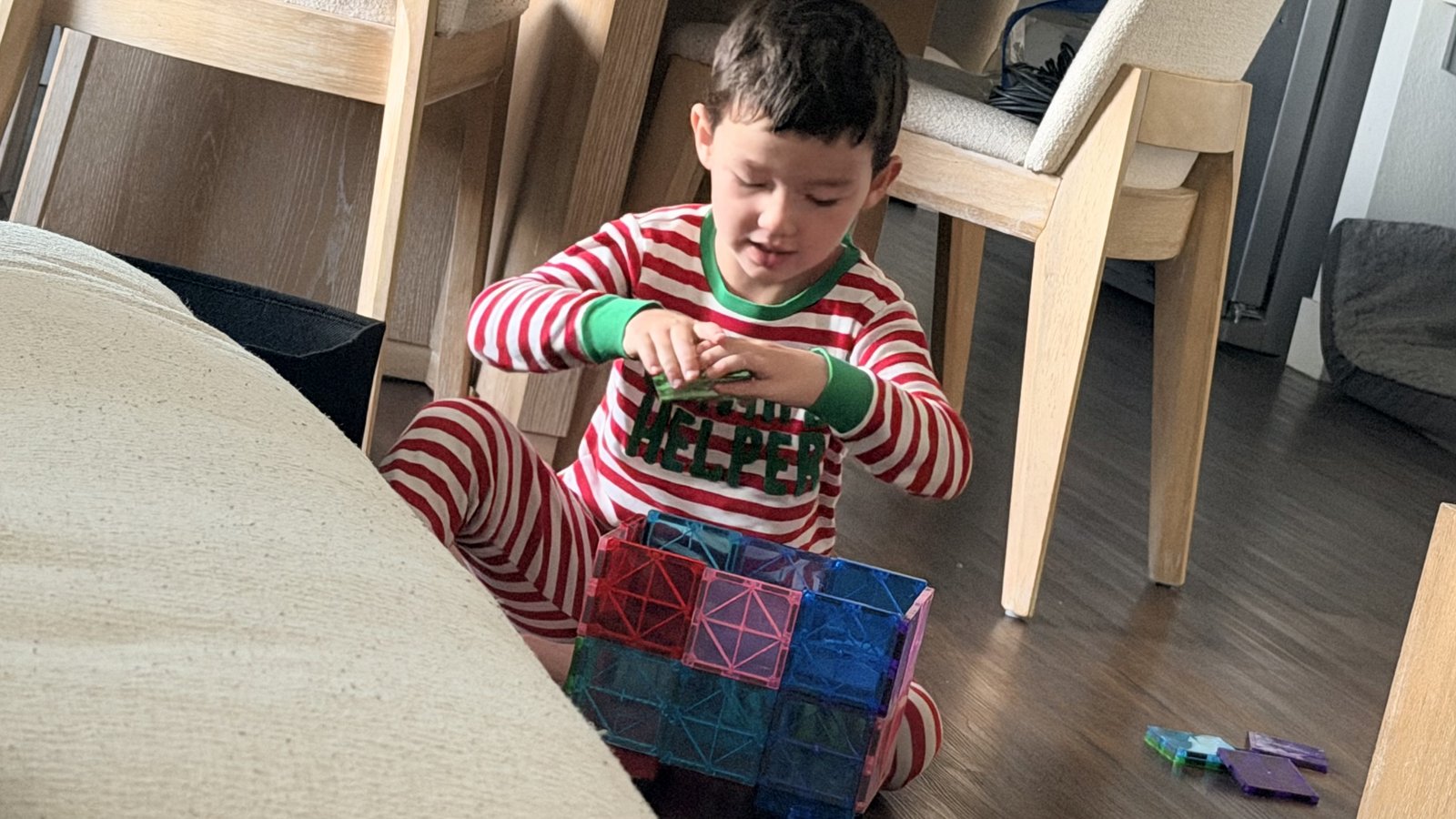
Ending screen time tantrums with a 4-year-old comes down to visual countdown timers, switching to low-dopamine shows, giving them control of the power button, and immediately pairing the transition with a fun next activity.
On this page
Okay so… if turning off the TV in your house feels like attempting to defuse a live bomb with a butter knife while wearing oven mitts, pull up a chair, grab your iced coffee, and breathe. ☕️ Listen… I get it. I have been down in the absolute trenches of screen-time warfare, and it is not for the faint of heart.
My 4-year-old son, Luke, is absolute magic. He is sweet, wildly energetic, permanently obsessed with wearing full camo from head to toe, and determined to do literally everything like his dad. But a few months ago? Turning off his shows turned my sweet, adventurous little dude into an absolute feral wildcat. OMG, the screams! The dramatic floor-flops where he looked like a tragic Shakespearean actor! The sheer, unbridled rage over a black screen! It was hell on wheels, and it was happening almost every single day.
Now, if you know me at all, you know I am a gizmo-loving mama and problem solver. When something in our home routine breaks down, I don’t just sit there—I go full-blown detective mode. We are a huge Colorado outdoors family. On any given weekend, Hubs, Luke, and I are out hiking through the pines, camping in the mountains, or spending hours standing by a freezing mountain stream while Luke proudly holds his tiny fishing rod alongside his dad. We live for fresh air, dirt, and action. But after a long day in the snow or out on the trails, we’d come home, and I’d turn on the TV for a quick 30-minute window so I could prep dinner without a 4-year-old trying to climb up my leg like a toddler raccoon.
And BAM—the second the screen went black, meltdown central hit our living room. It didn’t matter how great our day was. It was driving Hubs and me totally nuts, and it was draining every drop of energy I had left at the end of the day.
After tons of research, endless trial and error, and way too many cold white chocolate lattes that sat forgotten on the counter while I neutralized a living room crisis, I figured out a simple, systematic game plan that actually works for a stubborn, strong-willed 4-year-old. No screaming matches, no negotiating with tiny terrorists, and zero mommy guilt.
Here is the exact framework that saved our sanity and gave us our peaceful evenings back!
Why are screen time tantrums so damn hard for a 4-year-old?
Before we jump straight into the fixes, we have to pause and look at what is actually happening inside those tiny, hilarious, rapidly developing brains. Because here’s the truth I had to learn the hard way: your child isn’t throwing a tantrum just to make your life miserable or push your buttons. It isn’t just bad behavior or spite—it is straight-up brain biology.
When a 4-year-old sits down in front of a screen, especially modern media, several major neurological shifts happen all at once:
- The Dopamine Crash is brutal: Fast-paced cartoons flood young, sensitive brains with high levels of dopamine—the “feel-good, super-excited” brain chemical. When you suddenly click that red power button, their brain experiences an instantaneous, sharp drop in dopamine. It feels to them like going from a roller coaster directly into a brick wall. That sudden drop triggers an immediate physical flight-or-fight response before their rational brain can step in.
- Time is a completely abstract concept: Telling a 4-year-old “You have five minutes left!” or “Just one more show!” means absolutely NOTHING to them. They don’t wear watches, they can’t read an analog clock, and their perception of time is based entirely on how engaged they are. Five minutes playing in the dirt feels like ten seconds; five minutes waiting in line feels like six hours. So when you show up five minutes later and turn off the TV, to them, it feels completely random and unfair.
- The “Trance” state disconnects their senses: Have you ever called your child’s name four times while they were watching a show and received zero response? That’s not selective hearing—that’s hyper-focus. Screen time puts their brain into an alpha-wave state, similar to a deep trance. Yanking them out of that state without a sensory transition bridge feels physically jarring to their nervous system.
- Loss of total autonomy: Four-year-olds are at an age where they are desperate for control over their own lives. They want to pick their own socks, pour their own milk, and make their own choices. When a parent suddenly snatches the remote and shuts off their universe, it immediately triggers an intense power struggle because they feel totally helpless.
Once I understood that Luke wasn’t being malicious—his little nervous system was just completely overwhelmed—I realized I needed to stop fighting his brain and start working with it.
What screen time hacks actually worked in our house?
We tried a lot of nonsense advice online before finding what actually clicked. Here are the exact tools, gadgets, and shifts that turned our living room from a daily combat zone into a quiet, calm space where transitions just… happen.
1. The Visual Countdown Timer (the single best five dollars I have spent)
Telling Luke “five minutes left” was a total failure. But showing him time? That changed everything. I ended up buying a visual desktop clock where a bright red disk slowly disappears as time ticks down.
Instead of time being an invisible, abstract monster controlled by Mom, it became a clear, physical reality. Before I turn on his show, I set the timer right next to the TV or on the coffee table. I pull Luke over, point to it, and say, “When the red circle completely vanishes, the show is finished.”
Because he is a visual learner (like most 4-year-olds!), he can glance up from his show and actually see time running out. The red wedge gets smaller and smaller, so by the time the timer goes off, his brain has already processed the coming shift. It takes the element of surprise completely off the table!
2. The Low-Dopamine Show Swap
This was arguably our biggest breakthrough. I started auditing what Luke was actually watching, and I was shocked by how hyper-stimulating modern kids’ programming is. Rapid camera cuts, flashing neon colors, loud chaotic sound effects, and frantic characters drive dopamine through the roof.
We completely cut out hyper-stimulating, fast-paced cartoons during the school week. No hyper-active shows with constant neon flashing or screeching characters. Instead, we made the switch to calm, low-dopamine media.
These days, the shows Luke is completely obsessed with are Outdoor Boys and Outdoor Tom on YouTube — real dads and their kids out fishing, camping, catching dinner, and building shelters in the woods. It’s basically his own little world on a screen: slow, real-world footage instead of frantic, flashing, screeching cartoons (and honestly, Hubs happily settles right in and watches alongside him). The difference in his post-TV mood was instant and shocking. When the show ended, his brain wasn’t in a hyper-wired, chaotic state, which meant he could transition out of it without an emotional explosion.
3. Give Him the Power Button (Sharing the agency)
Remember how 4-year-olds crave control? I realized that by grabbing the remote and shutting off the TV myself, I was positioning myself as the dictator ending his fun. So, I completely shifted the power dynamic.
Now, when the visual timer hits zero, I don’t touch the remote. Instead, I hand the remote directly to Luke, point to the big red button, and say, “Okay, buddy! Timer’s up. Hit the red power button and lock it up!”
Giving my little dude total control over the physical act of turning off the TV turned a moment of loss into a moment of pride. He loves feeling grown-up and responsible. He clicks the button, points it proudly at the screen, and usually hands the remote back to me like he just completed an important mission for Hubs and me.
4. The Two-Minute Warning Hug & Sensory Bridge
You cannot expect a child to instantly jump from a high-focus screen trance into the real world without a sensory bridge. Two minutes before the show is officially over, I walk into the living room, sit down right next to Luke on the rug, and place a firm, loving hand on his back or pull him into a gentle hug.
This physical touch gently pulls his brain out of the screen trance and grounds his nervous system back in the room with me. I don’t yell from the kitchen over the sound of sizzling dinner pans! I get down on his physical level, make quiet eye contact, and softly say, “Two minutes left on the red timer, my dude. Then we’re turning off the screen and putting on our snow boots to go check the yard!”
This soft physical and verbal cue gives his nervous system time to shift gears gradually rather than snapping like a rubber band.
5. The Immediate High-Value Transition (Never turn off into a vacuum!)
This is the golden rule of screen time management: Never turn off the TV into a vacuum of boredom. If a child turns off a screen and looks around a quiet room with nothing obvious to do, their brain immediately mourns the lost entertainment. They go straight into “I’m bored, my show is gone, this sucks” mode.
I always line up a super high-value, high-engagement activity that starts the absolute second the TV turns off. The key here is knowing what your specific kid loves. For Luke, a few high-value hooks work every single time:
- Food interaction: “The TV is off! Time to help Mom roll simple sushi!” (He is ridiculously obsessed with wrapping up rice and avocado in seaweed strips—it feels like a craft project he can eat!).
- Outdoor mission: “Grab your camo jacket and grab your fishing rod from the porch! We have five minutes to scout for tracks in the backyard snow before dark!”
- Physical competition: “The screen is black! Quick, grab your monster trucks—I’m timing you to see if you can race three laps around the kitchen island!”
When the alternative to TV is something exciting, tangible, and fun — even something quiet like a screen-free audio player — the brain doesn’t mourn the end of the show—it gets excited for the next mission.
How do you stick to limits without feeling guilty or mean?
Here’s the deal, friend… consistency is where the magic happens, but perfection is a total myth. You can implement every single tool on this list, and there will still be days when your child is tired, hungry, coming down with a sniffle, or just in a mood, and a meltdown happens anyway. That doesn’t mean your system failed! It just means you are raising a human child.
When those tough days hit, here is how Hubs and I keep our own sanity intact without giving in or feeling like the worst parents on the planet:
Keep your own energy super calm and grounded
Kids have an uncanny ability to mirror our emotional state. If your child starts melting down and you respond by getting dysregulated, raising your voice, and stomping around the room, their brain internalizes that chaos. You become two dysregulated people clashing in a living room.
When Luke starts to tilt, I take a deep breath, drop my shoulders, take a sip of my cold white chocolate latte, and remind myself: This is not an emergency. His brain is just adjusting. Maintain a tone that is slow, quiet, and steady as a rock. Your calm will eventually act as an anchor for their storm.
Validate the feeling without holding back the boundary
You can be completely empathetic to your child’s feelings while still holding a firm, unshakeable boundary. You don’t have to be cold or punitive to be firm!
It is totally fine—and actually really healthy—to say: “I hear you, buddy. It sucks when show time is over! I love watching videos about giant black bears too, and it’s hard to stop. It’s totally okay to feel sad about it. But the TV is staying off until tomorrow.”
You are acknowledging that their emotions are real and valid, but you aren’t wobbly on the rule. If you give in and turn the TV back on just to stop the screaming, you are teaching their brain that a tantrum is the currency required to buy more screen time. Stand your ground with love!
Celebrate the clean transitions with big energy
We spend so much time correcting bad behavior that we sometimes forget to lavishly praise the good moments! When Luke turns off the TV on time, hands me the remote, and walks away without a fight, I make a huge, ridiculous deal out of it.
“Whoa! Did you see how fast you clicked that button?! You handled that like a total big kid! Give me a massive high five!” We do a ridiculous goofy dance in the kitchen, or I give him a huge bear hug. Positive reinforcement builds his self-image as a kid who is responsible and capable of handling his own transitions.
Frequently asked questions
How much screen time does Luke actually get in a day?
On a typical weekday, Luke gets around 30 to 45 minutes of screen time, usually in that late-afternoon window while I am prepping dinner and Hubs is finishing up work. On weekends, especially if we are out cold-weather hiking, camping, or out on the water all day, we might watch a family movie night with popcorn on the couch! We don’t worry about strict perfection; we focus on overall balance across the week.
What if my 4-year-old refuses to turn off the TV even with the remote in his hand?
If I hand Luke the remote and he freezes, refuses, or pushes my hand away, I don’t enter into a negotiation. I stay super calm and give a gentle choice: “You can click the red button, or Mom can help your hand click the red button. Which one do you want?” If he still hesitates for more than five seconds, I calmly take his hand in mine, guide his finger to the button together, press it, and say, “Awesome job working together!” No drama, no yelling—just a smooth, firm execution of the boundary.
Are high-dopamine or fast-paced shows completely banned in your house forever?
Nope! We aren’t anti-fun monks! But we treat fast-paced, high-dopamine cartoons like candy or dessert. We don’t serve dessert right before an important task or at a time of day when everyone is already exhausted. If Luke watches a slightly more energetic movie or show, we save it for a lazy Saturday afternoon when we have zero time pressure and can immediately head outside to run off that wired energy afterward.
What if I need more than 30 minutes of screen time to make dinner or get something done?
Girl, do NOT beat yourself up! We have all had days where we are sick, drowning in work deadlines, or just utterly exhausted, and the TV stays on for two hours so we can survive. When that happens, just use the exact same transition steps when it’s time to wrap it up: set the visual timer for the final 15 minutes, switch to a calmer show for the last block, bring in the two-minute warning hug, and have a fun activity ready when the screen goes dark.
At the end of the day, mama, remember this: you are doing an amazing job. Screen time in our modern world is tricky to navigate, and there is no single “magic wand” that fixes everything overnight. But if you take a week to implement a visual countdown timer, swap in some lower-dopamine shows, give your kiddo control of the remote, and bridge that transition with a fun next step, I promise you will see the temperature in your living room drop significantly.
Try just one or two of these tweaks this week and see how your little one responds! You’ve totally got this!
Affiliate link — if you sign up or buy through it, My Mama Mode may earn a small commission at no extra cost to you. As an Amazon Associate, My Mama Mode earns from qualifying purchases. My Mama Mode also participates in other retailer affiliate programs. Learn more.
Frequently asked
Most experts suggest around 1 hour of high-quality programming daily for a 4-year-old, but finding a predictable routine that fits your family's flow matters most!
Stay calm, hold the boundary firmly without yelling, and offer an immediate physical transition like a fun outdoor activity or a favorite snack to help regulate their nervous system.
Tap the one that fits, mama — no comment box, no pressure ✦
Keep reading, mama
What to Actually Say When Your 4-Year-Old Whines About Literally Everything
Exhausted by constant kindergarten whining? Annie shares battle-tested scripts, real-life resets, and sanity-saving tips for handling four-year-old meltdowns.

How to Teach Your 4-Year-Old Boy Independent Play (Without the Mom Guilt!)
Learn how to encourage independent play for your active 4-year-old boy without feeling guilty. Practical, real-life SAHM strategies that actually work.

How to Stop Morning Dressing Battles with a Stubborn 4-Year-Old (What Actually Works!)
Tired of morning outfit standoffs before school? Here is how I ended clothing battles with my stubborn 4-year-old without losing my cool or being late.