Sneaky Veggie Wins: Getting My Picky 4-Year-Old to Eat His Greens

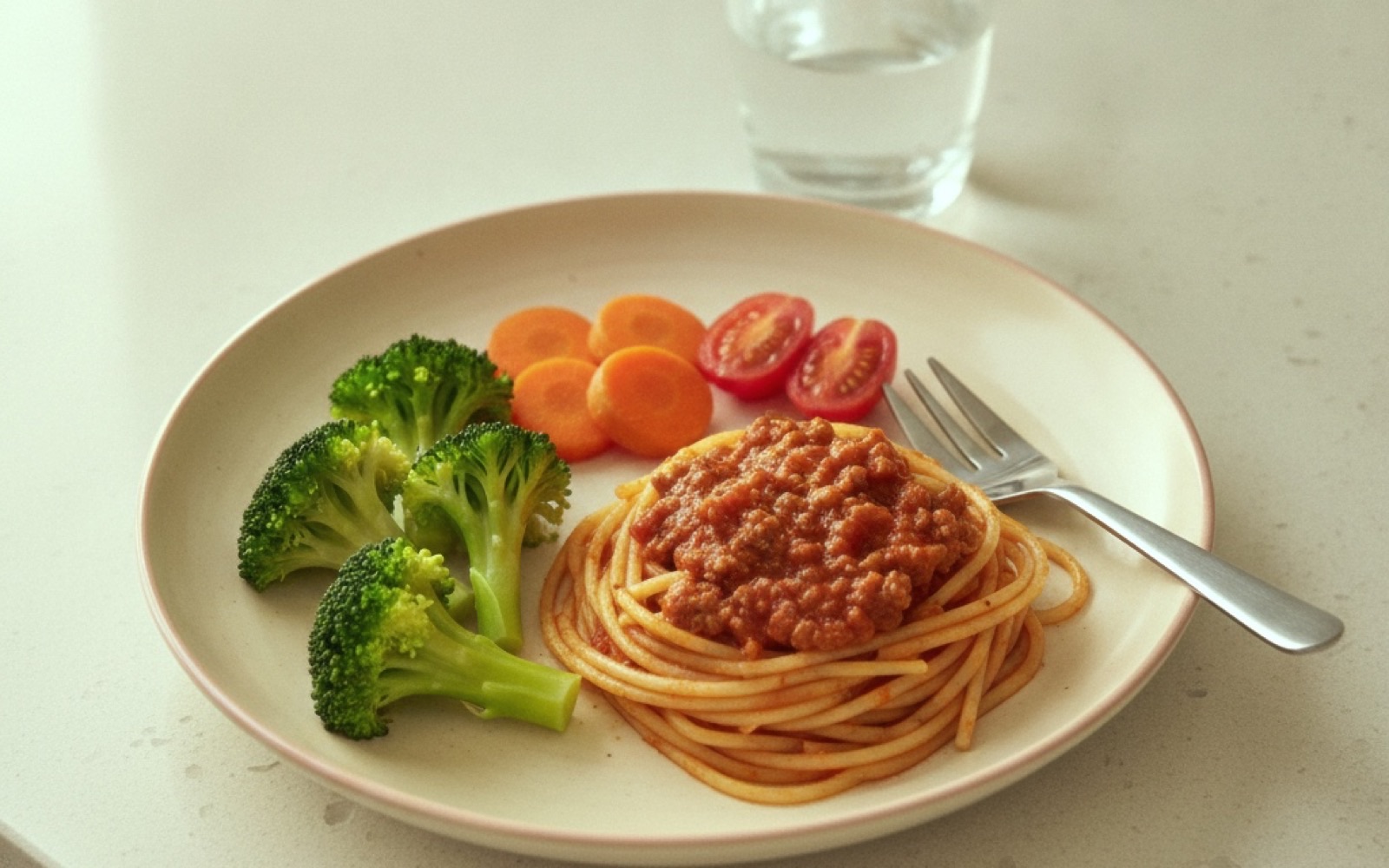
You can easily boost your picky toddler's nutrition by blending veggies into sauces, turning meals into interactive dipping experiences, and gamifying new foods without starting a dinnertime battle.
On this page
Okay so… picture this. You spend forty-five minutes in the kitchen carefully roasting organic broccoli florets. You toss them in olive oil, a little garlic powder, and a generous dusting of fresh parmesan. They come out of the oven golden, fragrant, and downright delicious. You place three tiny “dino trees” on your child’s plate, feeling like a shimmering beacon of modern motherhood.
Then your 4-year-old looks at the plate, recoils like you just served him a handful of live radioactive worms, and dramatically announces, “Mommy, green is YUCKY.”
Welcome to my life with Luke. My sweet, hilarious, energetic 4-year-old boy who will happily eat dried mud off his hiking boots or a mysterious berry he found near the creek, but treats a slice of fresh cucumber like an act of war.
Listen… if you are currently sitting on your kitchen floor sipping an iced coffee while staring at an untouched plate of carrots, I am holding your hand through the screen. Dinnertime with a picky 4-year-old is exhausting. Hubs came in the house the other afternoon after spending three hours on the river cleaning his favorite fishing rod, looked at Luke’s completely untouched plate of stir-fry, looked at my twitching eye, and gently walked right back out to the patio. Wise man.
Because here is the truth: I don’t have the patience or the emotional bandwidth to spend two hours negotiating “one more brave bite” of zucchini every single night. I just don’t. So instead of turning our dining table into a hostage negotiation zone, I went full covert ops. I became a master of sneaky veggie wins, leveraging my beloved kitchen gadgets to pump nutrition into Luke’s body without a single tears-and-scream meltdown.
Today, I’m sharing my absolute best, battle-tested, ultra-doable ways to hide and serve vegetables to a picky 4-year-old. Grab a refill on that coffee—we are going in.
Why is getting a 4-year-old to eat veggies harder than climbing a 14er?
Before we get into the recipes and hacks, let’s take a collective deep breath and talk about why our kids act like vegetables are literal poison. It’s not just your kid, and you aren’t doing anything wrong.
Around age four, kids hit a massive wave of independence. They realize they can’t control much in their lives—when they go to preschool, when they go to sleep, or whether they have to put on pants—but they CAN control what passes through their lips. Food becomes their ultimate bargaining chip. Add in evolutionary biology (kids naturally mistrust bitter flavors and bright green hues because, historically, those could be toxic plants in the wild), and you’ve got a recipe for pure stubbornness.
When Luke turned four, his picky eating peaked. Anything with a fleck of green was immediately vetoed. Texture became a dealbreaker. If a food was “squishy,” “stringy,” or “bumpy,” it was out.
That’s when I realized I needed a multi-pronged approach:
- The Stealth Route: Hiding pureed, imperceptible veggies inside foods he already loves (mac and cheese, marinara, smoothies) so he gets the daily vitamins he needs.
- The Fun Route: Changing the physical form, shape, and presentation of vegetables so they look like toys or games rather than “healthy food.”
- The Exposure Route: Slowly introducing whole veggies in zero-pressure ways so he eventually realizes green stuff won’t actually end him.
If you balance stealth with fun, you take the pressure off yourself. You stop worrying whether they ate enough spinach today, because you already know there was a cup of pureed squash hiding in their lunch.
The one that works better than any of my sneaky tricks: let him grow it
I want to put this before all the blending and hiding, because honestly? It has done more for us than every hidden-veggie sauce combined.
Every year we plant a mini garden. Nothing ambitious — no raised beds, no irrigation system, no Pinterest situation. Four things, the same four things, because they are the ones that actually work for us:
- Tomatoes
- Italian parsley
- Green onions
- Bell peppers
And here is the whole trick: Luke picks them himself. He is the one who goes out, decides a tomato is ready, twists it off, and carries it inside like he is delivering treasure. He checks on them. He has opinions about which plant is doing better.
A kid who fought me on a bell pepper on a plate will eat a bell pepper he grew. It is not really about the vegetable at that point — it is about it being his. He is not eating a food I put in front of him, he is eating something he made happen. Completely different transaction in a 4-year-old brain.
A few honest notes after doing this a few summers:
- Start absurdly small. Four plants. If you plant twelve things and half die, the lesson your kid learns is that gardening is sad.
- Pick the fast, obvious ones. Green onions and parsley grow quickly and forgivingly, which matters when your gardener has the patience of a 4-year-old.
- Let him do it badly. He waters too much. He picks things slightly early. It does not matter even a little — the point is ownership, not yield.
- It does not transfer automatically. Him eating his own tomatoes did not suddenly make him eat broccoli. But it moved something: vegetables stopped being the enemy category. That was worth more than any single food.
If you only take one thing from this whole post, take this one. It is the least sneaky thing I do and it has worked the best.
What are my secret-weapon blended sauces that Luke actually eats?
If you inspect my kitchen right now, you will find my high-powered Vitamix blender parked permanently on the countertop. If my house were on fire, my blender might genuinely be the third thing I rescue after Hubs and Luke. Blending is the undisputed king of sneaky veggie delivery.
Here are two sauces I make on heavy rotation. They freeze beautifully, taste incredible, and have a 100% approval rating from my opinionated 4-year-old.
1. “Incognito” Gold-Standard Mac and Cheese
Kids love orange food. Kraft set that standard decades ago. We are going to use that orange color to our advantage by pairing sharp cheddar with butternut squash and cauliflower. Luke thinks this is just super creamy cheese sauce. In reality, he’s eating two full servings of vegetables per bowl.
Ingredients:
- 8 oz whole grain or chickpea elbow pasta
- 1 cup peeled, cubed butternut squash (steam fresh or buy frozen to save time!)
- 1 cup cauliflower florets
- 1/2 cup low-sodium chicken or vegetable broth
- 1/2 cup whole milk (or heavy cream if you want extra richness)
- 1.5 cups finely shredded sharp yellow cheddar cheese
- 2 tbsp unsalted butter
- 1/2 tsp garlic powder
- 1/2 tsp onion powder
- 1/2 tsp salt
Step-by-Step Instructions:
- Steam the Veggies: Boil or steam the butternut squash and cauliflower until they are fork-tender—almost falling apart soft. This is critical for getting that silky texture.
- Boil the Pasta: Cook your elbow pasta according to package directions in salted water. Drain and set aside.
- Blend to Puree: Throw the steamed squash, cauliflower, broth, milk, butter, garlic powder, onion powder, and salt into your high-speed blender. Blend on high for a full 60 to 90 seconds until it is completely smooth, creamy, and vivid bright orange. Zero lumps allowed!
- Melt the Cheese: Pour the hot vegetable puree back into your warm pasta pot over low heat. Stir in the shredded cheddar cheese until it melts completely into a shiny, rich sauce.
- Combine: Fold in the cooked pasta until every noodle is coated. Serve warm.
Annie’s Pro-Tip: Use yellow cheddar, not white cheddar. The yellow cheese masks the squash perfectly so it looks like traditional comfort food.
2. The “Hulk-Free” Ultra-Nutrient Red Marinara
Standard jarred marinara sauce is fine, but homemade blended marinara is a superpower. You can load this up with green zucchini, spinach, carrots, and sweet bell peppers, and as long as the tomato base is rich and dark, your child will never see the green.
Ingredients:
- 1 tbsp olive oil
- 1 small yellow onion, diced
- 2 garlic cloves, minced
- 1 medium zucchini, chopped
- 2 large carrots, peeled and diced
- 1 red bell pepper, chopped
- 1 cup fresh baby spinach
- 1 can (28 oz) crushed tomatoes
- 1 tbsp tomato paste
- 1 tsp dried oregano
- 1 tsp dried basil
- 1 tbsp honey or maple syrup (cuts the acidity of the tomatoes)
- Salt and pepper to taste
Step-by-Step Instructions:
- Sauté the Veggies: Heat olive oil in a Dutch oven or deep skillet over medium heat. Add the onion, garlic, zucchini, carrots, and red bell pepper. Sauté for 8–10 minutes until everything softens up.
- Simmer: Add the crushed tomatoes, tomato paste, dried oregano, basil, and the baby spinach. Cover and let it simmer on low for 15–20 minutes so the flavors meld together and the carrots get very tender.
- Blend: Transfer the entire mixture to your blender (or use a heavy-duty immersion blender directly in the pot). Blend until velvety smooth. Stir in the honey and salt to taste.
- Serve: Toss with Luke’s favorite pasta shapes, use it as a dip for mozzarella sticks, or spread it over homemade mini pizza crusts he can build himself.
How can you use dips and fun shapes to trick a picky eater?
At 4 years old, mechanics matter just as much as flavor. Luke loves anything that gives him agency at the table. If I hand him a cooked, naked baby carrot, he will ignore it. If I hand him a “crunchy carrot coin” that he can dunk into a custom dip using a tiny dinosaur fork, suddenly he’s interested.
The Power of the Dip
Dips turn eating into an activity instead of a chore. If you give a toddler something to dip, they will eat almost anything just as a vehicle for the sauce.
Here are three dip formulas that incorporate sneaky veggies:
- The “Guac-a-Monster” Avocado Dip: Blend 1 avocado, 1/2 cup plain Greek yogurt, 1/2 cup fresh spinach, a squeeze of lime juice, a dash of cumin, and a pinch of salt. It’s bright green, super creamy, packed with healthy fats and iron, and perfect for dipping tortilla chips or cucumber sticks.
- Hidden-Veggie Ranch: Take 1 cup of plain Greek yogurt, stir in a packet of organic ranch seasoning, and mix in 1/2 cup of finely grated, squeezed-dry zucchini and steamed, pureed white beans. It looks like standard ranch, but it’s loaded with protein and fiber.
- Sweet Potato “Honey” Mustard: Whisk together 2 tbsp yellow mustard, 1 tbsp honey, 2 tbsp mayonnaise, and 3 tbsp pureed cooked sweet potato. It gives you that classic sweet-and-tangy flavor Luke loves on chicken tenders, but sneaking sweet potato into the mix adds vitamin A and fiber.
Presentation Hacks That Actually Work
You don’t need to spend two hours carving bento box masterpieces, but small presentation shifts pay off big time.
- Mini Cookie Cutters: Buy a cheap set of small stainless steel food cutters (stars, hearts, animals). Slice cucumbers, bell peppers, or zucchini into planks, and stamp out tiny shapes. A star-shaped cucumber slice tastes infinitely better than a round slice to a 4-year-old.
- Food Picks & Cocktail Forks: Kids love miniature tools. Serving cooked veggies with colorful plastic animal picks makes them feel like they’re playing a game.
- Deconstructed Plates: Use a divided tray or a muffin tin to serve lunch. Put a dip in the center cup, and surround it with different textures: mini shape veggies, pretzel sticks, cheese cubes, and fruit slices. Separation reduces mealtime anxiety for picky eaters.
What is the “Veggie of the Week” game and does it really work?
While hiding veggies gets the nutrients into their bodies today, we still want our kids to eventually recognize and choose vegetables on their own as they grow up. That’s where our “Veggie of the Week” system comes in.
Every Sunday, Luke and I go to the local grocery store. I give him complete control over one specific produce item. I tell him, “You get to pick our Veggie of the Week! Find the coolest, weirdest-looking vegetable in the aisle.”
Some weeks he picks purple carrots. Other weeks he picks a gigantic head of Romanesco broccoli (which looks like an alien spaceship), yellow bell peppers, or sugar snap peas.
Here is how we play the game at home:
- Zero Pressure to Eat: The rule of Veggie of the Week is that Luke does not have to swallow it if he doesn’t want to. The goal is simply to interact with it.
- Preparation Control: Luke helps me wash it, chop it (using his child-safe nylon knives), or place it on the baking sheet. When kids help cook food, their fear of that food drops by 80%.
- The Rating System: We serve a small portion alongside dinner. Luke rates the veggie using three metrics:
- How does it look? (Cool, weird, boring?)
- How does it sound when you crunch it? (Loud, quiet, squishy?)
- How does it taste? (Yummy, okay, or yucky?)
We keep a dry-erase board on the side of our fridge where Luke gives the veggie a rating from 1 to 5 stars. Even if he gives a vegetable a 1-star rating and spits it into a napkin, he still gets a star on his chart for being a “Brave Food Explorer.”
Gamifying the process removes the power struggle entirely. It shifts the dynamic from “Mom is forcing me to eat green things” to “Luke is an expert food critic analyzing an alien plant.” Last week, he actually admitted that raw purple carrots were “pretty crunchy and okay.” I considered that a historic victory.
Which kitchen gadgets make sneaky veggie prep effortless?
Having the right tools cuts your prep time in half and makes blending vegetables into fine, undetected textures infinitely easier.
If you want to build a sneaky veggie arsenal, these are the items I recommend keeping on your counter or in your cabinets:
You do not need all of these, but each one earns its counter space for a different reason.
A high-speed blender is what gets sauces, soups and green smoothies genuinely silk-smooth — and smooth is the entire point, because one stray green fleck ends the meal. An immersion blender does the same job without the pouring, straight into a hot pot of soup or marinara.
A food processor grates zucchini, carrots and mushrooms fine enough to disappear. An air fryer turns kale, chickpeas and zucchini into something crunchy that reads as a snack instead of a vegetable.
And the humble box grater or microplane shreds veggies so thin they melt into baked goods entirely. That one cost me almost nothing and does the most work.
- High-Speed Blender (Vitamix or Ninja): A regular cheap blender often leaves tiny chunks or leafy bits behind. If a 4-year-old sees a green speck in his mac and cheese, the game is over. A high-speed blender pulverizes spinach, squash, and kale into a completely uniform liquid or puree.
- Immersion Hand Blender: Perfect for weeknight wins. You can steam carrots and cauliflower right in your pasta sauce pot, stick the immersion blender straight into the pot, and whiz it into a smooth sauce in 30 seconds without dirtying another dish.
- Air Fryer: The air fryer is magic for texture issues. If your kid hates squishy veggies, toss broccoli florets, zucchini slices, or kale leaves with a little oil and salt, and air-fry them until they are as light and crispy as potato chips. Luke calls air-fried kale leaves “crunchy green sea monsters.”
- Fine Microplane Grater: When I make turkey meatballs, meatloaf, or muffin batter, I grate raw zucchini, carrots, and apples on a microplane. The shreds are so tiny that they practically dissolve during the cooking process while adding incredible moisture and nutrients.
Frequently asked questions
Isn’t “sneaking” veggies bad because it doesn’t teach kids to like real vegetables?
Not at all, as long as you do it alongside visible exposure! I view sneaking veggies as an insurance policy. It takes the stress off you as a parent because you know your child is getting adequate nutrition, fiber, and vitamins. At the same time, keep serving small, low-pressure portions of whole vegetables on their plate (or play games like Veggie of the Week). Sneaking handles their current physical health while exposure builds their long-term eating habits.
What do I do if my child notices the green flecks and refuses to eat?
First, don’t panic or get defensive! Take a calm breath. If they catch a green fleck in a sauce or casserole, you can downplay it lightly: “Oh, that’s just a herb for flavor!” But moving forward, step up your blending game. Use a high-powered blender to eliminate visual flecks completely, or stick to color-matching hiding techniques—blend yellow and orange veggies (squash, sweet potato, yellow peppers, carrots) into red and yellow dishes, and save dark leafy greens like spinach for dark berry smoothies or brown chocolate muffins.
Can I freeze these blended veggie sauces for busy weeknights?
Yes! In fact, batch-cooking and freezing is the ultimate mom hack. Whenever I make my “Incognito” Mac and Cheese sauce or “Hulk-Free” Marinara, I double the batch. Let the extra sauce cool completely, then pour it into silicone freezer trays or large ice cube trays. Once frozen, pop the sauce cubes into labeled freezer bags. On crazy weeknights when Hubs is out fishing late or Luke is having a full-blown toddler bedtime meltdown, I just thaw a couple of sauce cubes in a saucepan, toss with freshly boiled pasta, and dinner is served in five minutes flat.
Affiliate link — if you sign up or buy through it, My Mama Mode may earn a small commission at no extra cost to you. As an Amazon Associate, My Mama Mode earns from qualifying purchases. My Mama Mode also participates in other retailer affiliate programs. Learn more.
Frequently asked
Steam butternut squash and cauliflower until fork-tender, then blend them with milk, broth, butter, and seasonings in a high-speed blender until silky smooth. Stir that vivid orange puree into your cooked pasta along with yellow cheddar cheese to completely mask the veggies. Your child gets two full servings of vegetables while thinking they are just enjoying classic comfort food.
Around age four, kids hit a massive wave of independence and realize food is one of the few things in life they can totally control. Evolutionary biology also makes them naturally suspicious of bitter flavors, bright green hues, and squishy or bumpy textures. It is completely normal behavior, mama, so take a deep breath and know you are not doing anything wrong.
Try turning it into a zero-pressure game by letting your child choose a cool or weird vegetable at the grocery store. Have them help you wash or chop it using child-safe knives, and then let them rate its appearance, crunch sound, and taste without forcing them to swallow it. Giving them agency and taking away the expectation to eat it removes the mealtime power struggle entirely.
Tap the one that fits, mama — no comment box, no pressure ✦
Keep reading, mama
20-Minute Scratch Snack Bars That Actually Hold Up in a 4-Year-Old's Lunchbox
Ditch the boxed store-bought junk! These easy, 20-minute scratch-baked snack bars are lunchbox-approved, nut-free friendly, and made with real pantry food.
Scratch High-Protein Pancakes That Keep My Wild Kindergartner Full Until Lunch
Ditch the processed boxed mix! Learn how to make fast, delicious, high-protein scratch pancakes that fuel active kids through busy school mornings.
Make-Ahead Freezer Meals That Save Our Busy Colorado Weeks
Make-ahead Italian freezer meals from scratch — lasagna, chicken piccata, braciole and meatballs — plus the batch prep system behind them.